Top Supplements for Bodybuilding: What Science Really Recommends
Learn which supplements truly work for natural muscle growth, supported by major meta-analyses. Protein, creatine, caffeine, and omega-3—find out how much, when, and if it’s worth investing.
Contents (7)▾
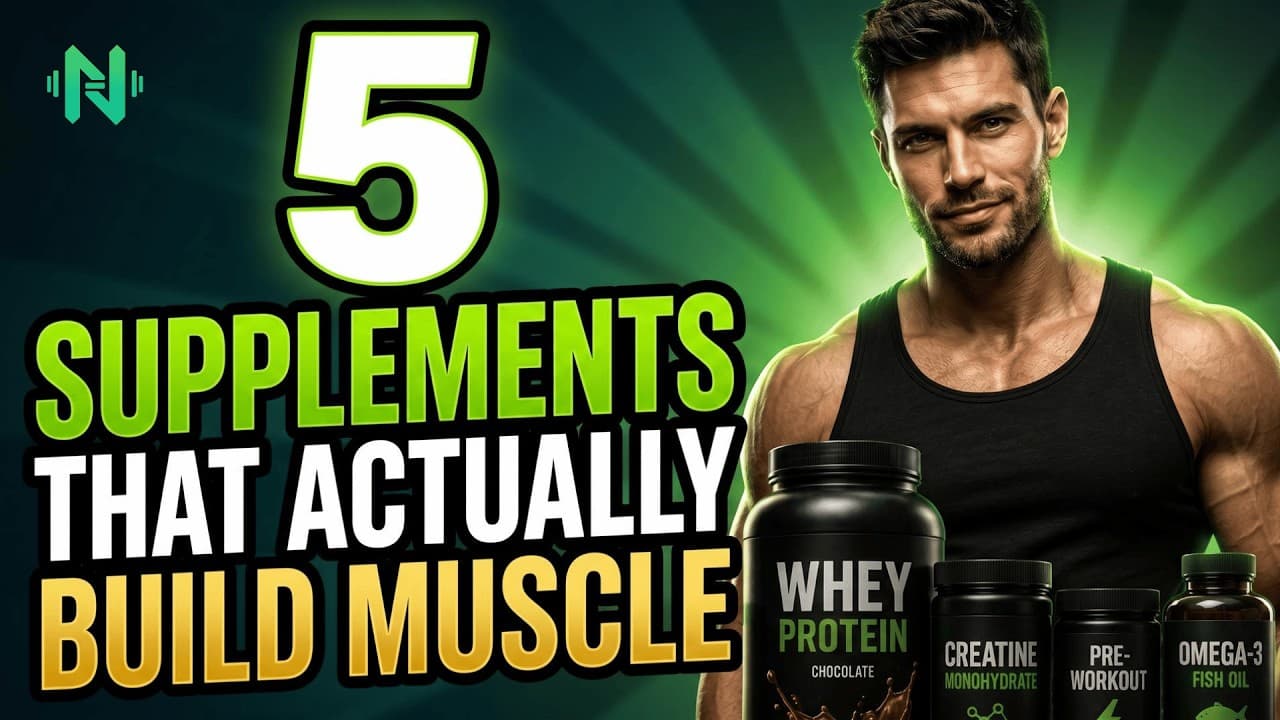
Top Supplements for Bodybuilding
According to recent meta-analyses, creatine can increase lean mass gains by up to 1.37 kg in adults undergoing resistance training, without significant side effects for healthy individuals (Kreider et al., 2017).
Scientific Context: What the Research Says About Supplements and Hypertrophy
If you train naturally, looking for the best supplements for bodybuilding requires a critical perspective. The current consensus in the literature is clear: supplements can optimize results but don’t replace well-structured training and proper nutrient intake (Helms et al., 2014). The main path to muscle growth involves progressive overload, volume, consistency, and recovery—supplements act as allies, not the main players.
Among hundreds of products, few truly deliver significant results validated by robust studies. From a physiological standpoint, hypertrophy occurs due to a positive balance between muscle protein synthesis and breakdown, dependent on both mechanical stimulus (e.g., bench press 4x8 with 80 kg) and nutritional intake (Schoenfeld, 2010). Recent meta-analyses make it clear that protein, creatine, and caffeine remain at the top when it comes to cost-effectiveness, safety, and efficacy for natural athletes (Morton et al., 2018; Branch et al., 2021).
Moreover, the right dose, intake pattern throughout the day, and realistic expectations make all the difference to extract benefits without falling into marketing traps.
Protein Supplementation: Essential for Muscle Growth?
A meta-analysis of 49 studies showed that consuming 1.6 to 2.2 g of protein per kg of body weight per day is the optimal range to promote muscle mass gains during resistance training, regardless of protein source (Schoenfeld et al., 2018). Whey protein supplements are convenient for hitting this daily target, but foods like eggs, chicken, and milk are just as valid.
For those aiming to optimize results, spreading protein intake over at least three meals per day enhances muscle protein synthesis signaling (Morton et al., 2018). A practical example: a 75 kg athlete might choose to supplement with 30 g of whey post-workout if they haven’t reached their total protein intake through food.
- Best supplements for bodybuilding men & women: protein is universal, effective for all adult sexes and ages (Morton et al., 2018).
- Best supplements for bodybuilding beginners: newbies also benefit, but gain no extra advantage over meeting protein needs through food alone.
Creatine Monohydrate: The Gold Standard in Effectiveness and Safety
Multiple meta-analyses and reviews confirm that creatine monohydrate is the most studied and validated supplement for hypertrophy without adverse effects in healthy individuals (Rosene et al., 2020). Average gains range from 1-2 kg of lean muscle mass over weeks to months alongside structured training (Kreider et al., 2017).
The standard dose is 3-5 g/day, preferably continuously. Its main mechanism is boosting muscle phosphocreatine stores, enhancing strength and volume performance in high-intensity exercises. This might allow, for example, 1 or 2 extra reps on a 4x6 squat or increasing loads over several weeks.
- Best supplements for bodybuilding recovery: creatine also appears to speed performance recovery and reduce post-workout damage markers.
- Best supplements for bodybuilding without side effects: so far, no kidney toxicity reported in healthy users (Rosene et al., 2020).
Caffeine and Beta-Alanine: Acute Performance and Training Volume
Caffeine at doses of 3-6 mg/kg improves strength, power, and repetition capacity according to meta-analyses (Grgic et al., 2019). For a 70 kg individual, a dose between 210 and 400 mg taken 30-60 minutes before training produces an ergogenic effect—equivalent to 2-3 double espressos or a caffeine pill. The practical result: more energy during bench press, faster recovery between sets, and a better chance to hit the recommended weekly hypertrophy volume (10-20 sets/muscle/week).
Beta-alanine, typically dosed at 4-6 g/day, enhances interval training and longer sets (e.g., 12-15 leg press reps). It works by raising muscle carnosine levels, buffering H+ accumulation and delaying fatigue (Saunders et al., 2017). The hypertrophy impact occurs indirectly through increased training volume.
- Commercial pre-workouts: usually combine caffeine and beta-alanine; real effectiveness depends on doses, which are often suboptimal in multi-ingredient formulas (Branch et al., 2021).
Omega-3: Anabolic Potential and Recovery
Recent studies show that EPA and DHA, the main omega-3 fatty acids, can potentiate protein synthesis when combined with resistance training (Smith et al., 2011). Although the effect is smaller than protein or creatine, there’s evidence to recommend omega-3s, especially if your diet is low in fatty fish.
- Best supplements for bodybuilding recovery: omega-3 has a modest anti-inflammatory effect that may promote muscle recovery and joint health in strength training practitioners.
- Suggested dose: around 2-3 g/day of EPA+DHA.
Supplements Without Proven Efficacy for Hypertrophy
- Isolated BCAAs: useless if you already consume enough protein (Morton et al., 2016).
- Glutamine, HMB, ZMA: no superiority for hypertrophy or recovery in healthy adults who train (Kersick et al., 2017).
- “Natural anabolic” plant supplements: lack scientific rigor.
Always consult meta-analyses and systematic reviews when evaluating new products—miracle formulas usually remain marketing hype without scientific backing.
Practical Conclusion: Top Supplements for Bodybuilding
- Protein supplementation helps but isn’t essential if you reach 1.6-2.2 g/kg/day of protein from food.
- Creatine monohydrate is safe, effective, and affordable for natural men and women.
- Caffeine and beta-alanine boost performance and training volume, leading to greater potential gains.
- Omega-3 may assist with recovery/building muscle if your dietary intake is insufficient.
- Other popular supplements have zero or minimal efficacy based on quality science.
Apply science to your training with NattyCore.
Apply the Science to Your Training
Evidence-based block periodization, MEV/MRV volume control and AI coaching.